
Stamped Batik: Types and Production Process
Batik is a traditional textile art that has become an important part of Indonesia’s cultural heritage. In addition to handwritten batik (batik tulis), there is also stamped batik (batik cap), which has a different production process but still results in beautiful and valuable fabric. In this article, we will discuss what stamped batik is, the types of batik stamps, and the production process.
What is stamped batik?
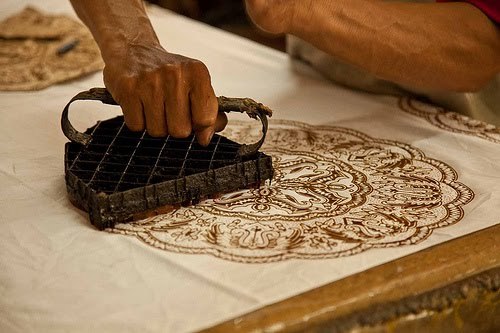
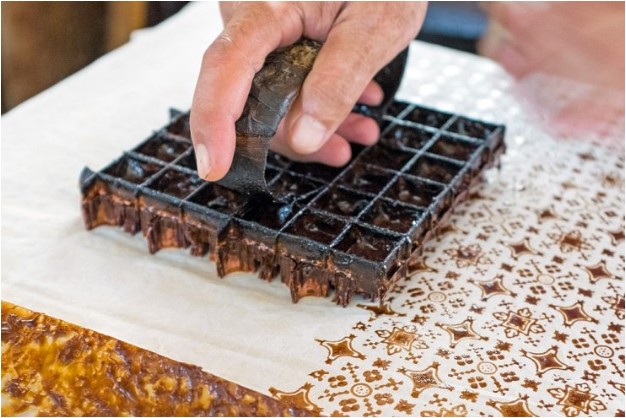
Stamped batik is a method of batik-making where patterns or designs on fabric are created using a stamp. These stamps are usually made of copper and are shaped according to the desired design motif. This process allows for faster and more efficient batik production compared to handwritten batik, which is made manually.
Stamped batik was first introduced in the 19th century as an effort to meet the high market demand for batik fabric. By using stamps, the time required to create a piece of batik fabric can be significantly reduced without sacrificing the aesthetic quality of the batik motifs.
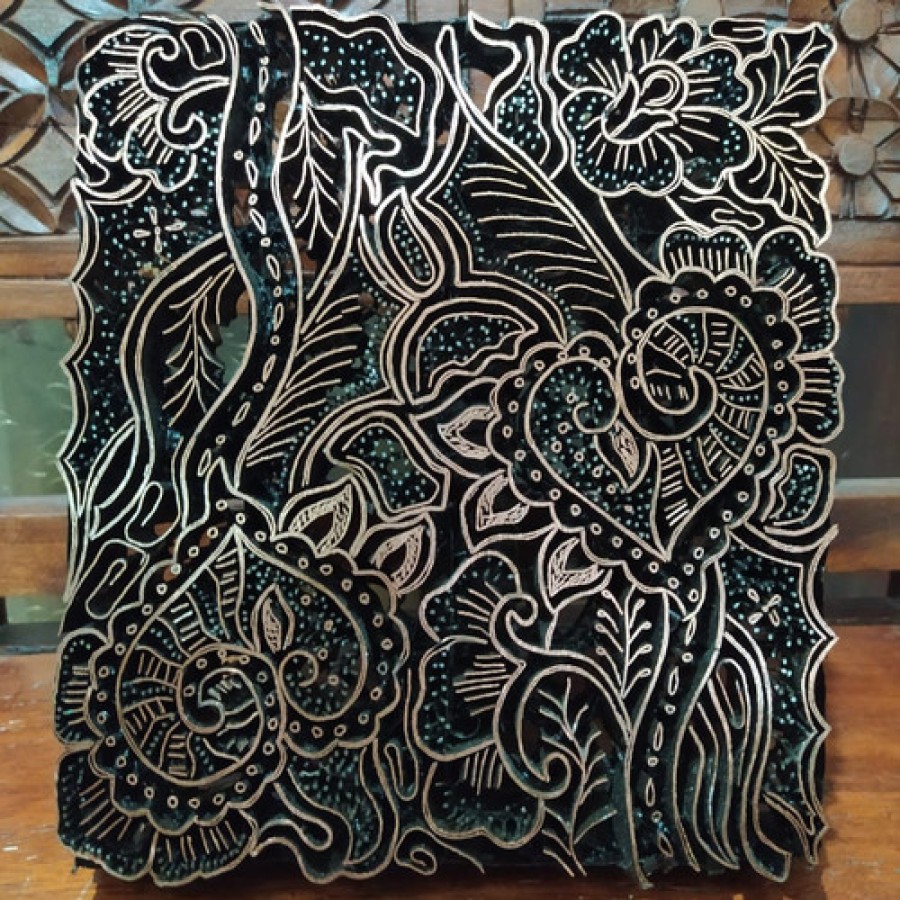
Copper Stamps
- The most commonly used stamp, made of copper because this material is durable and capable of producing fine details. Copper stamps are handmade by skilled artisans to ensure every detail of the motif is well-printed.
Wooden Stamps
- Some artisans use stamps made of wood, especially for simpler motifs that do not require intricate details. Wooden stamps are generally cheaper than copper stamps.
Combination Stamps
- There are also stamps that are a combination of copper and wood, where the detailed parts of the motif are made of copper while other parts of the stamp are made of wood to reduce production costs.
Single Motif and Combination Motif Stamps
- Single motif stamps are used to produce a simple single motif, while combination motif stamps are used to create more complex designs by combining several motifs in one stamp or using multiple stamps in sequence.
The Process of Making Stamped Batik
The production of stamped batik involves several important steps that must be carried out carefully to ensure a high-quality final product. Here are the stages in the stamped batik production process:
- Preparing the Fabric
The fabric used is usually mori cloth or high-quality cotton. The fabric is washed and boiled to remove impurities and starch, then dried before further processing.
2. Applying Wax with Stamps
The stamps are heated in liquid wax and then stamped onto the fabric according to the desired motif. This process requires precision to ensure the motif is clearly and neatly printed.
3. Dyeing
After the stamping process is complete, the fabric is dipped into a dye bath. The areas covered by wax will remain their original color while the rest of the fabric absorbs the dye.
4. Removing the Wax
The dyed fabric is then boiled to remove the wax. After boiling, the fabric is washed and dried to remove any remaining wax.
5. Finishing
The finished stamped batik fabric is inspected to ensure the quality of the motifs and dyeing. If any areas need correction, touch-ups are made. The fabric is then ironed and ready to be used or sold.
Conclusion
Stamped batik is an efficient and practical method of batik production, allowing for the creation of batik fabric in large quantities without sacrificing the quality of the motifs and designs. With various types of batik stamps available, artisans can create a wide range of beautiful and varied motifs. The careful stamped batik production process ensures that each piece of stamped batik fabric has high aesthetic value and remains an important part of Indonesia’s cultural heritage.